Knuckle Boom Cranes Take on Tight Urban Job Sites
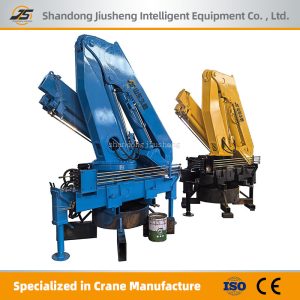
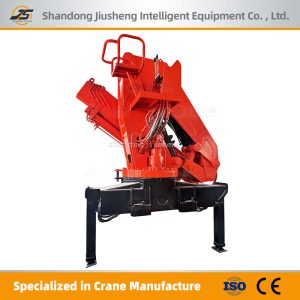
Knuckle boom cranes—also known as articulating cranes—are increasingly being used on crowded urban construction and utility sites where space is limited and precision matters. Unlike fixed-boom cranes that require significant setup space, a knuckle boom crane uses a folding, multi-jointed arm that can be compactly stowed and unfolded only when needed. This design is helping contractors work in narrow streets, busy commercial districts and residential areas with restricted access.
In construction, knuckle boom cranes are commonly used for lifting steel, concrete components, roofing materials and tools to heights or into areas that are difficult to reach with larger equipment. Utility crews use them for setting poles, lifting transformers and handling cables, while municipal teams rely on them for street lighting maintenance and emergency response. Because the boom can articulate at multiple points, operators can reach over obstacles and place loads with a high degree of control.
The main advantages are compactness, maneuverability and versatility. A truck-mounted knuckle boom crane can travel with the vehicle, reducing the need for separate transport and setup. Its folding boom allows it to operate in tight spaces and under overhead restrictions that would challenge a straight-boom crane. Operators can also attach different tools, such as grabs, buckets, winches and platforms, allowing one machine to handle multiple tasks.
Safety and efficiency are additional benefits. Modern knuckle boom cranes often include load-moment indicators, stability controls and remote operation, helping operators maintain safe working conditions. For contractors and utility fleets, the ability to perform lifting, maintenance and material-handling work with one compact unit can reduce equipment needs and improve productivity. As cities become denser and job sites more constrained, the knuckle boom crane is becoming a practical solution for work that demands reach, flexibility and a small footprint.
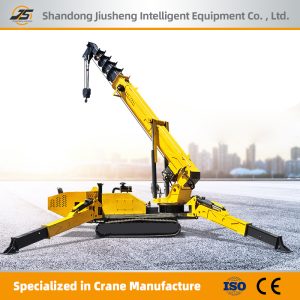
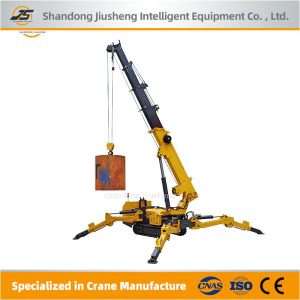
 Spider crane,knuckle boom crane,Marine crane