 Spider crane,knuckle boom crane,Marine crane
Key Features & Real‑World Uses of Spider Cranes
76Spider Crane
View detailsSearch the whole station Marine cranes PRODUCTS
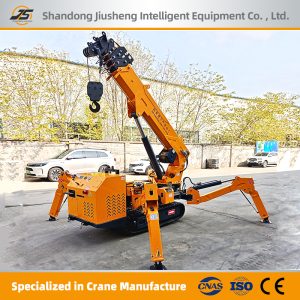
Spider cranes—also known as mini crawler cranes or crawler spider cranes—are compact lifting machines designed to operate in spaces where conventional cranes cannot fit. Their name comes from the four hydraulic outriggers that extend outward like a spider’s legs, providing stability and lifting strength that is disproportionate to their compact size.
What Makes a Spider Crane Unique?
Compact, Foldable Design
When folded, a spider crane takes on a box-like shape that allows it to travel through standard doorways and narrow access points. The smallest models have a body width of just 590mm, making them narrow enough to pass through a single standard door. This compact footprint enables these machines to be transported by service elevators to upper floors of high-rise buildings, or lifted by larger cranes to rooftops and other elevated work sites.
The Spider Legs: Hydraulic Outriggers
The defining feature of a spider crane is its four extendable outriggers. Once the crane is positioned at the work site, these outriggers unfold and spread outward, creating a wide, stable base. This design allows the crane to distribute the weight of the load over a larger surface area, enabling stable lifting even on floors with limited load-bearing capacity.
Unlike traditional cranes that rely on massive counterweights to stay upright, a spider crane uses its outriggers to achieve stability. The legs can be positioned at different angles and heights, allowing the crane to operate on uneven ground, slopes, and even steps.
Lifting Capacity
Despite their small size, spider cranes offer lifting capacities that are often comparable to much larger machines. Available models range from 1 ton to 14 tons, with maximum lift heights reaching up to 25 meters or more. This favorable weight-to-capacity ratio means the crane itself can remain lightweight and portable while handling heavy loads.
How Does a Spider Crane Operate?
Most spider cranes are equipped with wireless remote control systems, allowing a single operator to control the machine from a safe distance. The remote control typically features a micro-speed mode for precision work, as well as adjustable speed settings. An LCD monitor on the remote displays the actual load weight and rated total load, giving the operator real-time feedback during lifting operations.
The crane moves on rubber crawler tracks, which provide excellent maneuverability while minimizing damage to finished floors and other sensitive surfaces. Power options include diesel, electric, and battery-powered models, with electric versions offering zero emissions and quiet operation—particularly suitable for indoor and environmentally sensitive environments.
Safety Systems
Modern spider cranes incorporate multiple safety features:
Moment Limiter System (Safe Load Indicator): This system monitors the load and prevents tipping accidents. When the load reaches 90% of the rated capacity, the crane activates visual and audible warnings. At 100%, the crane automatically stops operation.
Outrigger Interlock System: This feature prevents the crane from operating unless the outriggers are properly deployed and grounded.
Tilt Alarm: An alarm activates if the crane operates at more than a 3-degree inclination.
Working Range Restriction: Operators can set limits for lifting height, working radius, boom angle, and slew range—particularly useful when working near obstacles such as power lines or building structures.
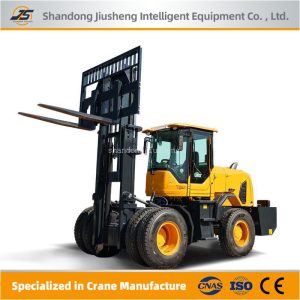
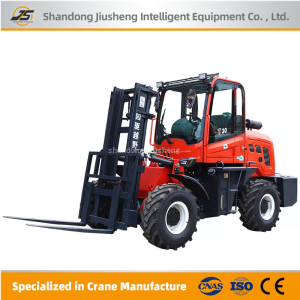
Rough Terrain Forklift
View details
In the field of material handling and light construction, light-duty cranes have emerged as indispensable equipment, renowned for their flexibility, efficiency, and cost-effectiveness. Unlike heav...
View details