Forklift Tail Crane: Definition, Advantages and Applications
Introduction
In modern material handling and logistics operations, versatility and efficiency are critical factors in selecting equipment. Among the innovative solutions that have emerged in recent years is the forklift tail crane (also known as a forklift-mounted jib crane, forklift tail lift, or forklift flying jib). This specialized attachment combines the mobility of a forklift with the lifting capabilities of a crane, creating a highly adaptable piece of equipment for a wide range of industrial applications. This article explores what a forklift tail crane is, its key advantages over traditional lifting equipment, and its primary applications across various industries.
Definition of Forklift Tail Crane
A forklift tail crane is an integrated material handling device that combines the functions of a forklift and a crane into a single unit. It typically consists of several key components: the forklift chassis (which provides mobility, driving functionality, and control capabilities), a telescopic or articulating boom arm, and a lifting mechanism with a hook assembly. The crane assembly is mounted on the rear platform or tail section of the forklift, thus giving it the name “tail crane.” The boom arm can be extended, retracted, and often rotated, allowing the operator to lift and move suspended loads to positions that would be impossible for a standard forklift alone.
There are several design variations of forklift tail cranes. Some models feature a full knuckle-boom (articulating) design that folds compactly when not in use, while others utilize a telescopic straight boom for maximum reach. Many modern units incorporate hydraulic systems powered by the forklift’s existing hydraulic system, enabling smooth and precise control of the boom’s extension, retraction, and lifting actions. The entire assembly can be either permanently installed or designed to be detachable, allowing the forklift to be used in its conventional configuration when crane functionality is not required.
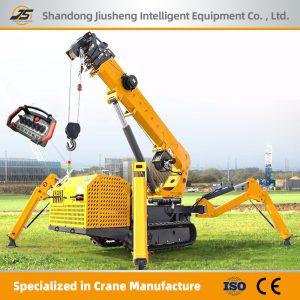
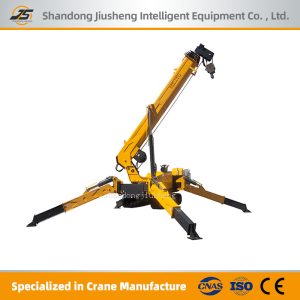
 Spider crane,knuckle boom crane,Marine crane