 Spider crane,knuckle boom crane,Marine crane
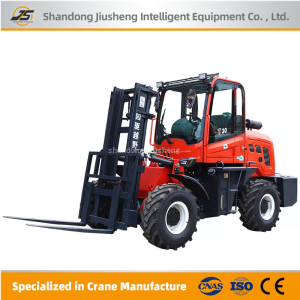
Diesel Forklift — Stable High-Torque Power for Heavy-Duty Material Handling
141Diesel Forklift
View detailsSearch the whole station Marine cranes PRODUCTS
In the field of industrial material handling and engineering construction, improving operation efficiency while controlling comprehensive costs is the core goal of enterprise equipment upgrading. The forklift crane, as an efficient multi-purpose lifting device, has gradually replaced traditional single-function equipment in many scenarios by virtue of its unique structural design and diverse functional attributes.
The core advantage of the forklift crane lies in its powerful functional compatibility. It retains the flexible mobility and short-distance transportation capacity of a traditional forklift, while adding the vertical lifting and long-distance outreach capacity of a crane. The telescopic boom can be adjusted freely according to operation needs, adapting to different lifting heights and working radii. It can stably handle palletized goods, long steel materials, mechanical equipment, and other types of cargo, solving the problem of difficult handling of special-shaped goods in traditional logistics operations.
Space adaptability is another prominent feature of the forklift crane. Large-scale tower cranes and overhead cranes are limited by installation conditions and site space, and cannot adapt to small-scale, scattered, and flexible lifting operations. In contrast, the forklift crane has no fixed installation requirements, can move freely with the working site, and is suitable for frequent switching of operation scenarios. Its small turning radius and flexible walking performance make it ideal for small and medium-sized construction sites, urban renovation projects, and indoor warehouse renovation operations.
From the perspective of long-term operation, the forklift crane brings significant cost optimization benefits for enterprises. The integrated design reduces the number of mechanical equipment on site, lowers equipment maintenance costs and labor matching costs, and simplifies daily equipment management work. The whole machine adopts durable mechanical accessories and a stable hydraulic transmission system, with low failure rate and long service life, ensuring continuous and stable operation in high-intensity working environments.
This equipment is widely used in multiple industries and scenarios. In the logistics industry, it is used for container loading and unloading, high-level cargo stacking, and warehouse goods transfer; in the construction industry, it undertakes the hoisting and installation of steel structures, construction pipes, and small building materials; in factory workshops, it is applied to equipment handling, disassembly, and assembly work. For outdoor field operations such as road maintenance and port transshipment, the off-road forklift crane model can also adapt to rough road conditions to complete stable lifting operations.
With the continuous upgrading of industrial operation standards, multi-functional, efficient, and energy-saving lifting equipment has become the mainstream trend. The forklift crane, which balances performance, flexibility, and economy, provides a reliable and efficient material handling solution for various industrial scenarios, and is a cost-effective choice for enterprise equipment iteration and upgrading.
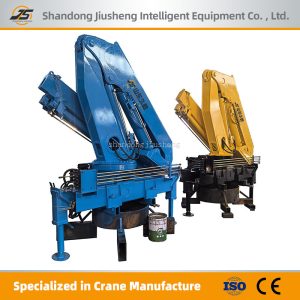
knuckle boom crane
View details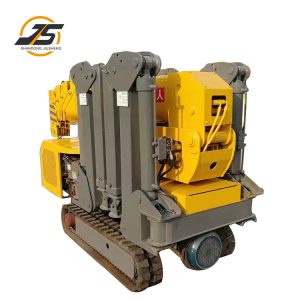
(1) When the spider crane needs to lift a heavy object lower than the plane where the crane is located or the falling hook needs to relax the wire ...
View details
Introduction In modern material handling and logistics operations, versatility and efficiency are critical factors in selecting equipment. Among the innovative solutions that have emerged in re...
View details