 Spider crane,knuckle boom crane,Marine crane
Multi-purpose 6.3T Crane Truck with Lifting and Hauling Capability – Ideal for Job Sites
916.3 Ton Truck Mounted Crane for Construction Site Lifting & Transport
View detailsSearch the whole station Marine cranes PRODUCTS
An aerial work platform(AWP),also known as an aerial device,aerial lift,or mobile elevating work platform(MEWP),is a mechanical device designed to provide temporary access for people or equipment to inaccessible areas,usually at height.It serves as a safe and flexible alternative to traditional ladders or scaffolding,widely used in various industries where elevated work is required.
The core function of an aerial work platform is to lift personnel,tools,and materials to specific heights with controlled motion and stable support.Unlike permanent access equipment such as elevators,AWPs are designed for temporary and flexible use,making them suitable for maintenance,construction,emergency rescue,and other tasks that require mobility and adaptability.They are typically capable of being set up and operated by a single person,which enhances work efficiency in many scenarios.
Most aerial work platforms are designed to lift limited weights,usually less than a ton,though some models have a higher safe working load(SWL)to accommodate multiple workers and heavier equipment.Beyond basic transport and access,many AWPs are equipped with additional features such as electrical outlets or compressed air connectors for power tools,and some can be fitted with specialist equipment like carrying frames for window glass,expanding their application scope.
The design of aerial work platforms integrates mechanical structures,hydraulic or electromechanical actuators,and electronic controls to ensure reliable operation under industry standards.They play a crucial role in reducing the risk of falls from height,one of the leading causes of workplace accidents,by providing a stable and secure working platform for operators.
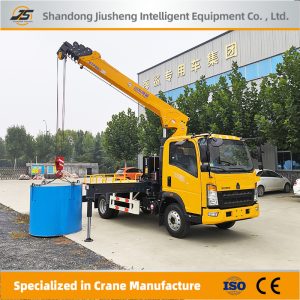
6.3 Ton Truck Mounted Crane for Construction Site Lifting & Transport
View details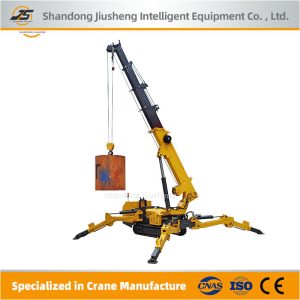
Spider cranes—also known as mini crawler cranes or crawler spider cranes—are compact lifting machines designed to operate in spaces where conventional cranes cannot fit. Their name comes from the ...
View details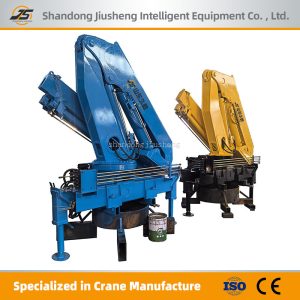
knuckle boom crane
View details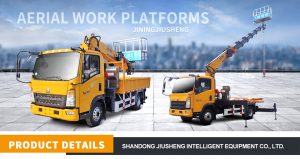
Aerial Work Platforms (AWPs), also known as Mobile Elevated Work Platforms (MEWPs), are essential equipment for performing tasks at height safely and efficiently. They have largely replaced tradit...
View details