 Spider crane,knuckle boom crane,Marine crane
How to Choose the Right Spider Crane for Your Project
54Spider crane
View detailsSearch the whole station Marine cranes PRODUCTS
Aerial work platforms come in various types, each with unique structural features and functional characteristics to meet different work requirements. The key difference between types lies in their lifting mechanism, which determines their reach, mobility, and suitability for specific work environments. Below are some of the most common types used in industries worldwide.
Scissor lifts are one of the most widely used types, characterized by their criss-cross (scissor-like) support structure that extends vertically to raise the work platform. They are primarily designed for vertical elevation, offering a spacious and stable platform that can accommodate multiple workers and tools. Electric scissor lifts are popular for indoor use due to their quiet operation and zero emissions, while diesel-powered models are more suitable for outdoor rough terrain, with higher load capacity and working height.
Boom lifts, also known as cherry pickers, feature an extendable arm (boom) with a worker bucket attached at the end. They are divided into two main variants: articulated boom lifts and telescopic boom lifts. Articulated boom lifts, also called knuckle boom lifts, have multiple hinged sections that allow the boom to bend and pivot, enabling access to areas around obstacles or in tight spaces. Telescopic boom lifts extend in a straight line, providing maximum horizontal and vertical reach, making them ideal for open-area operations such as bridge inspections and utility line maintenance.
Other common types include vertical mast lifts, which have a compact single-column design and are suitable for one-person indoor maintenance tasks; trailer-mounted lifts, which are portable and can be towed by vehicles for easy transportation; and spider lifts with crawler tracks, designed to work on uneven or soft ground in confined areas. Each type is engineered to address specific operational needs, from terrain adaptability to load capacity and maneuverability.
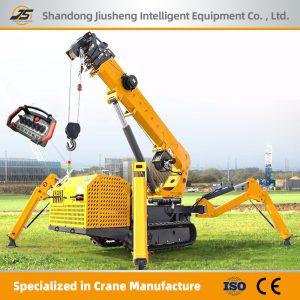
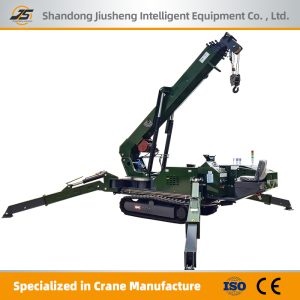
Crawler spider Crane
View details
An articulated boom crane, commonly known as a knuckle boom crane, is a highly versatile type of hydraulic crane widely used in construction, logistics, utility work, and marine applications. K...
View details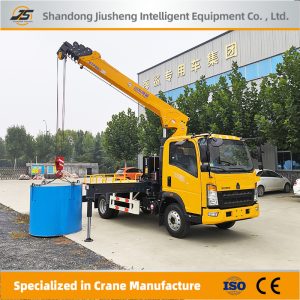
6.3 Ton Truck Mounted Crane for Construction Site Lifting & Transport
View details