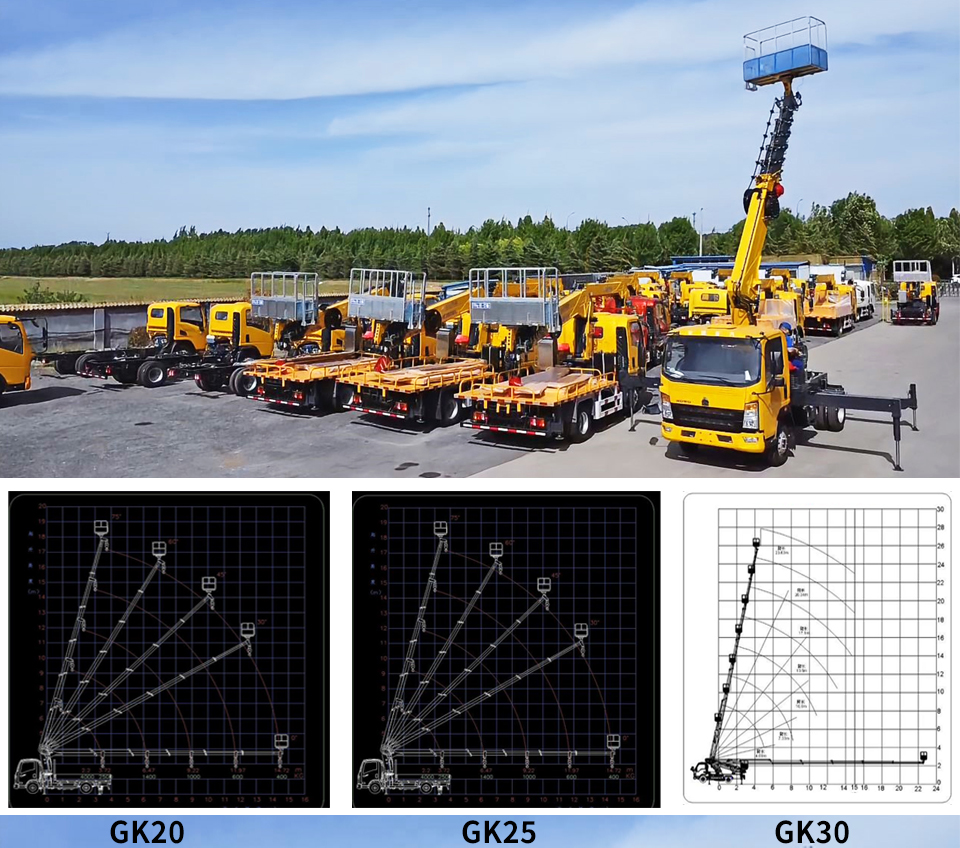
While truck-mounted aerial work platforms are safe when used correctly, proper operation and maintenance are critical to prevent accidents. Key safety guidelines include:
Operators must receive professional training and hold relevant certifications to ensure they understand the equipment’s functions and safety protocols.
Before operation, inspect the equipment thoroughly, including the boom, hydraulic system, brakes, tires, and safety devices. Any defects must be repaired before use.
Ensure the truck is parked on a stable, level surface, and deploy outriggers fully to provide additional stability. Avoid operating on soft or sloped ground without proper reinforcement.
Adhere to load capacity limits and never allow more operators or tools than the platform can safely carry.
Monitor weather conditions; avoid operation in strong winds, heavy rain, or extreme temperatures that may affect equipment stability.
Regular maintenance, including lubrication, hydraulic system checks, and electrical system inspections, is essential to keep the equipment in optimal condition.
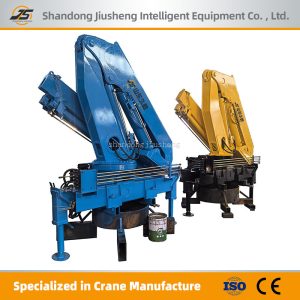
The knuckle boom crane offers a practical and efficient solution for material handling. Its core feature is an articulated boom with multiple pivot points, or "knuckles," which provides s...
 Spider crane,knuckle boom crane,Marine crane