 Spider crane,knuckle boom crane,Marine crane
Knuckle Boom Crane vs. Straight Boom Crane – A Practical Comparison
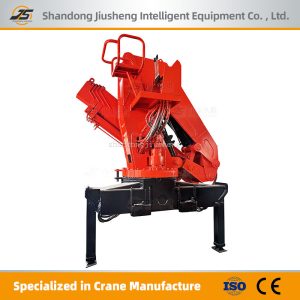
31Knuckle Boom Crane
View detailsSearch the whole station Marine cranes PRODUCTS
EIn the realm of material handling and heavy lifting, the knuckle boom crane, often referred to as an articulated crane, has established itself as a practical option for operators seeking a combination of precision and reach. Unlike straight boom cranes, the articulated design allows for a folding mechanism, offering a distinct set of advantages for various industries.
Compact Design with Extended Reach
One of the defining characteristics of the knuckle boom crane is its ability to fold into a compact footprint. When not in use, the boom folds down, occupying minimal space on a truck or platform. This feature is particularly beneficial for urban construction sites or logistics operations where space is at a premium. Despite this compact storage, when fully extended, these cranes provide a notable reach, allowing operators to place loads with accuracy over obstacles or into hard-to-access areas.
Precision in Load Handling
The articulation at the knuckle point provides a level of hydraulic finesse that many operators value. This design enables a vertical lifting path, meaning the load can be moved straight up or down without significant horizontal drift. For applications involving delicate equipment, precision placement, or working near structures, this controlled movement can contribute to operational safety and efficiency.
Diverse Applications Across Industries
Knuckle boom cranes are utilized across a broad spectrum of sectors:
Logistics and Delivery: For last-mile delivery of heavy goods, such as construction materials or industrial components.
Construction: Assisting in setting steel structures, placing prefabricated elements, or handling roofing materials.
Forestry and Agriculture: Equipped with grapples or specialized attachments for handling timber or bulk materials.
Marine and Ports: Performing maintenance duties or cargo handling in confined dock spaces.
Considerations for Selection
When selecting a knuckle boom crane, businesses typically evaluate factors such as maximum lifting capacity at various radii, the total weight of the installation, and the availability of remote control systems. Modern models often feature advanced hydraulic systems that allow for smooth multi-function movements, helping operators complete tasks with greater efficiency.
Knuckle Boom Crane
View details
In the construction and glazing industries, spider cranes are prized for their ability to handle fragile materials with precision. For example, when installing large glass panels or curtain walls,...
View details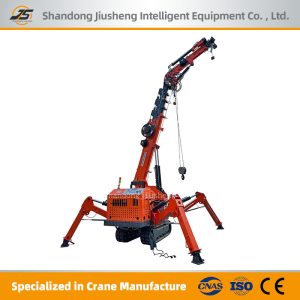
Spider cranes are used across a wide range of industries and applications: Glass Installation and Curtain Wall Lifting: Their compact size allows them to lift glass panels from rooftops, betwee...
View details
While truck-mounted aerial work platforms are safe when used correctly, proper operation and maintenance are critical to prevent accidents. Key safety guidelines include: Operators must receiv...
View details