 Spider crane,knuckle boom crane,Marine crane
Key Features & Real‑World Uses of Spider Cranes
44Spider Crane
View detailsSearch the whole station Marine cranes PRODUCTS
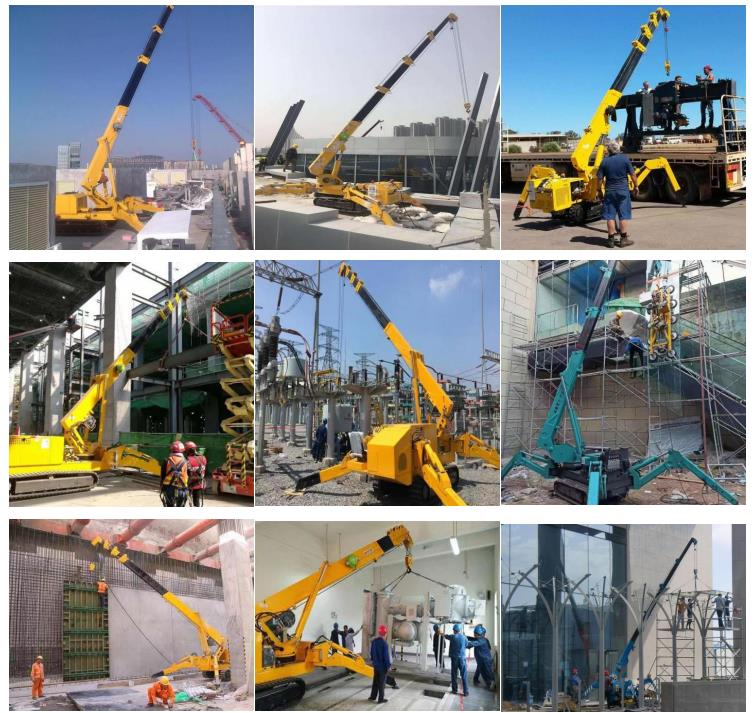
The spider crane’s genius lies in its design. Unlike conventional cranes, it is electrically or hydraulically powered, often producing zero on-site emissions, making it ideal for indoor use. Its lightweight structure allows it to traverse elevators, standard doorways, and even be positioned on finished floors or rooftops without causing damage.
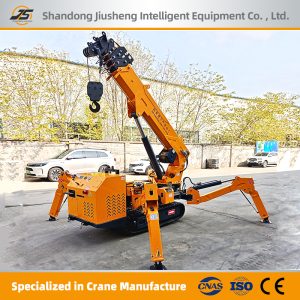
The most notable feature is its fully hydraulic outrigger system. Each leg can be extended, retracted, and leveled independently. This allows the crane to stabilize itself on uneven terrain, staircases, or around obstacles, creating a solid foundation for safe lifting operations. Furthermore, many models offer telescopic booms with optional articulating jibs, enabling them to reach over obstacles or through windows with pinpoint accuracy.
Operation is typically managed via a remote control, allowing the operator to position themselves for the best view of both the load and the often-tight surroundings. This maximizes safety and precision.
Key Technical Principles
Stability Over Strength: The outriggers distribute the crane’s weight and load moment over a wider area, counteracting the forces that could cause tipping. Advanced models have automatic stability monitoring systems.
Compact Power: It utilizes high-torque, low-speed hydraulic motors or efficient electric drives to deliver significant lifting force from a small package.
Precision Control: Proportional hydraulic valves allow for smooth, millimeter-perfect movement of the hook, which is critical when maneuvering valuable machinery, glass panels, or architectural elements in tight quarters.
Typical Applications
The spider crane is indispensable across multiple sectors:
Construction: Installing HVAC units on rooftops, placing steel beams in retrofits, lifting glazing for skyscrapers.
Historic Renovation: Carefully lowering antique fixtures or installing new materials in heritage buildings where access is limited.
Industrial Plants: Maintaining or replacing pumps, valves, and motors in crowded factory floors or between complex machinery.
Interior Fit-outs: Positioning heavy sculptures, museum exhibits, or stage equipment indoors.
Utility Work: Installing transformers or other equipment in confined urban substations or street corridors.

The knuckle boom crane offers a practical and efficient solution for material handling. Its core feature is an articulated boom with multiple pivot points, or "knuckles," which provides s...
View details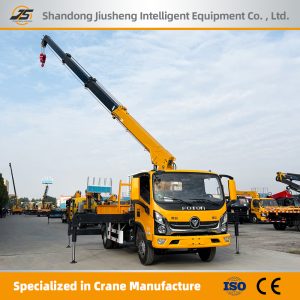
6.3 Ton Truck Mounted Crane for Construction Site Lifting & Transport
View details
In the fields of modern construction, logistics, and emergency response, efficiency and reliability are central to success. Traditional lifting equipment often faces challenges with mobility and s...
View details