 Spider crane,knuckle boom crane,Marine crane
Understanding the Crawler Crane – Heavy-Lifting Equipment Designed for Complex Job Sites
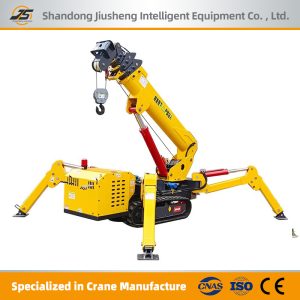
71Crawler spider crane
View detailsSearch the whole station Marine cranes PRODUCTS
With numerous models and specifications available, selecting the most suitable crawler spider crane for a given project is a common concern for contractors. The following key considerations may help in making an informed decision.
Determine the Required Lifting Capacity
The primary factor is the maximum load weight and working radius needed for the project. Consider the heaviest component, required lifting height, and operating radius. Avoid oversizing – focus on actual job requirements. Also consider potential future projects to ensure the investment remains useful over a longer period.
Assess Site Conditions
Site conditions directly affect crane selection. Soft ground calls for attention to ground bearing pressure. Confined spaces require evaluation of swing radius and transport dimensions. Slope work demands knowledge of gradeability and load‑carrying travel capability. On hilly or uneven terrain, the crane’s mobility becomes a critical factor.
Consider Transport and Assembly Convenience
If the project involves frequent relocation, transport and assembly efficiency are vital. Telescopic‑boom crawler cranes require no boom assembly, making them suitable for rapid deployment. Lattice‑boom models vary in disassembly time depending on their modular design. Transport width, number of transport pieces, and self‑assembly features are worth examining.
Review Safety Equipment and Control Systems
Safety is paramount in lifting operations. Load moment limiters, anti‑two‑block devices, and over‑hoist protection are standard safety features. Advanced control systems and intuitive interfaces contribute to safer and more efficient operation.
Evaluate Total Cost of Ownership
Beyond the purchase price, consider fuel or electricity consumption, maintenance costs, parts availability, and residual value. Electric or hybrid models may offer lower operating costs over the long term.
By systematically evaluating these factors in light of specific project needs and budget, you can make a more rational equipment selection, supporting smooth project execution.
Crawler spider crane
View details
The knuckle boom crane offers a practical and efficient solution for material handling. Its core feature is an articulated boom with multiple pivot points, or "knuckles," which provides s...
View details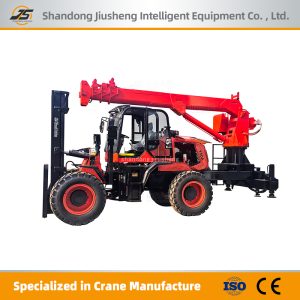
forklift is one of the common pieces of equipment in warehouses, factories, and construction sites. However, standard forks have a limitation — they can only lift loads from underneath. When it co...
View details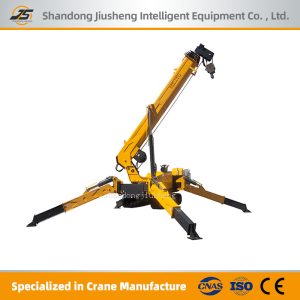
Traditional cranes often struggle to operate in narrow construction sites, indoor workshops, urban renovation projects, and tight glass curtain wall installation scenarios. Our spider crane is pro...
View details