Search the whole station Marine cranes PRODUCTS

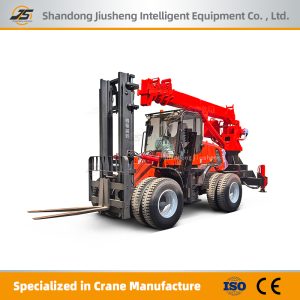
Applications of Forklift Tail Crane

News 150
  1. Warehousing and logistics: In warehouses and distribution centers, forklift tail cranes are used to lift and carry overhead cargo, handle long or bulky items such as lumber and pipes, and place goods onto tall storage racks. They are particularly valuable in facilities where overhead cranes cannot be installed due to space or structural constraints.
  2. Construction sites: On construction sites, these units are employed to install and remove building components, lift and position steel beams, concrete panels, roof trusses, and scaffolding materials. Their compact size allows them to operate in confined construction zones such as building interiors, basements, and urban job sites with limited access.
  3. Manufacturing and factory maintenance: In manufacturing facilities, forklift tail cranes assist in carrying large equipment and heavy machinery parts. They are commonly used for removing and installing motors, pumps, and other mechanical components during maintenance operations. Applications can also be found in scrap recycling and automotive repair industries.
  4. Steel mills and metal fabrication: The ability to lift long, heavy structural elements such as I-beams, steel coils, and metal plates makes forklift tail cranes ideal for steel mills and metal fabrication shops, where overhead crane coverage may be incomplete or unavailable.
  5. Agricultural and rural applications: Their all-terrain mobility allows these units to be used in agricultural settings, rural construction, and field operations where traditional cranes cannot access due to muddy, uneven, or unpaved surfaces.
  6. Logistics and freight handling: In freight terminals and loading docks, forklift tail cranes can handle heavy shipments, including machinery crates, industrial equipment, and oversized pallets that exceed the capacity of standard forklift forks.
  7. Municipal and utility work: Power utility companies and municipal construction crews use forklift tail cranes for installing transformers, lifting utility poles, and positioning equipment in narrow urban alleys or residential areas where large crane trucks cannot navigate.
  8. Mining and energy sectors: Heavy-duty telescopic models with high load capacities (up to 50 tons or more) are utilized in mining operations and energy infrastructure projects for lifting and transporting large components in remote or rugged terrain.

Conclusion

The forklift tail crane represents a practical and innovative solution for businesses that require crane-like lifting capabilities without the substantial investment, spatial requirements, and operational limitations of traditional cranes. By combining the mobility and ubiquity of the forklift with the lifting versatility of a jib crane, this equipment provides an optimal balance of cost-efficiency, maneuverability, and functionality. As industries continue to seek ways to maximize equipment utilization while minimizing capital expenditure, the forklift tail crane is likely to see increasing adoption across construction, warehousing, manufacturing, and logistics sectors worldwide. Proper operator training, regular inspection, and adherence to load capacity ratings remain essential for safe and effective use of these versatile tools.

The prev: The next:

Related recommendations

Click Cancel to reply
    Expand more!
    E-mail:kong@sd-jiusheng.com
    E-mail:kong@sd-jiusheng.com
    1
    E-mail:kong@sd-jiusheng.com