 Spider crane,knuckle boom crane,Marine crane
Core Advantages of Crawler spider Cranes – Stability, Versatility, and Efficiency
84Crawler spider Crane
View detailsSearch the whole station Marine cranes PRODUCTS
In the field of material handling and light construction, light-duty cranes have emerged as indispensable equipment, renowned for their flexibility, efficiency, and cost-effectiveness. Unlike heavy-duty cranes designed for large-scale lifting tasks, light-duty cranes are engineered to meet the demands of small to medium-sized operations, balancing compact design with reliable performance. Widely applied in construction sites, warehouses, farms, municipal projects, and logistics yards, they provide a practical lifting solution for scenarios where heavy equipment is impractical or unnecessary.
The popularity of light-duty cranes stems from their unique set of advantages that cater to diverse operational needs. First and foremost is their compact size and maneuverability. Most light-duty cranes, especially truck-mounted or on-board models, feature a streamlined structure that allows them to navigate narrow spaces, urban streets, and confined work areas—such as indoor warehouses or narrow construction lanes—with ease. This mobility eliminates the limitations of large cranes, making them ideal for urban engineering and small-scale projects.
Another key benefit is easy operation and low maintenance. Designed with user-friendliness in mind, light-duty cranes typically adopt intuitive control systems, enabling operators to master them with minimal training. Additionally, their simplified mechanical structure reduces the frequency of failures and lowers maintenance costs, which is a significant advantage for small businesses, farms, and start-ups looking to control operational expenses. They also consume less fuel compared to heavy-duty counterparts, further enhancing cost-efficiency in long-term use.
Versatility is another standout feature of light-duty cranes. Equipped with adjustable lifting heights and boom lengths, they can handle a wide range of loads—from small construction materials (such as bricks, pipes, and steel bars) to logistics cargo, farm produce, and municipal equipment. Many models support customization, allowing users to choose configurations based on specific needs, such as adding a hoist for precise lifting or modifying the base for better stability on uneven ground.
Light-duty cranes are highly adaptable to various industries, making them a multi-scene lifting tool. In construction and municipal engineering, they are used for lifting lightweight building materials, installing street lamps, repairing roads, and maintaining green spaces—tasks that require mobility and flexibility rather than ultra-high load capacity. Their small footprint ensures they do not disrupt urban traffic or occupy excessive work space, making them a preferred choice for urban renewal projects.
In logistics and warehousing, light-duty cranes streamline loading and unloading operations. They can efficiently move cargo between trucks and storage shelves, reducing manual labor intensity and improving work efficiency. For small warehouses or freight yards with limited space, on-board light-duty cranes integrated with trucks offer a one-stop solution for transportation and lifting, eliminating the need for additional lifting equipment.
The agricultural sector also benefits greatly from light-duty cranes. Farmers use them to lift and transport farm produce (such as fruits, vegetables, and grains), move agricultural machinery (like small tractors and irrigation equipment), and construct farm facilities. Their durability and ability to operate on uneven rural terrain make them suitable for outdoor agricultural operations year-round.
Safety is a top priority in lifting operations, and light-duty cranes are equipped with multiple safety features to ensure stable performance. Most models come with overload protection systems that automatically stop lifting when the load exceeds the rated capacity, preventing equipment damage and accidents. Stable outriggers (for fixed or truck-mounted models) enhance balance during operation, even on slightly uneven surfaces. High-quality steel structures and corrosion-resistant coatings extend the service life of the crane, ensuring reliable performance in harsh outdoor environments.
To meet international standards, reputable light-duty cranes are certified by authoritative organizations such as CE, ISO, and ANSI. These certifications guarantee that the equipment complies with global safety, quality, and environmental requirements, making them suitable for export to markets in Europe, North America, Southeast Asia, and beyond.
As a cost-effective, flexible, and versatile lifting solution, light-duty cranes play a crucial role in boosting operational efficiency across multiple industries. Whether for small-scale construction, logistics handling, agricultural operations, or municipal maintenance, they offer a practical alternative to heavy-duty equipment, helping businesses reduce costs and improve productivity. With continuous technological upgrades, light-duty cranes are evolving to meet more specialized needs, becoming an essential tool for modern light-weight lifting operations worldwide.
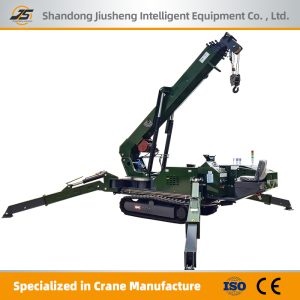
Crawler spider Crane
View details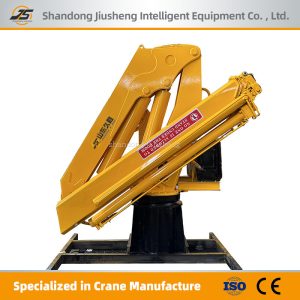

An aerial work platform(AWP),also known as an aerial device,aerial lift,or mobile elevating work platform(MEWP),is a mechanical device designed to provide temporary access for people or equipm...
View details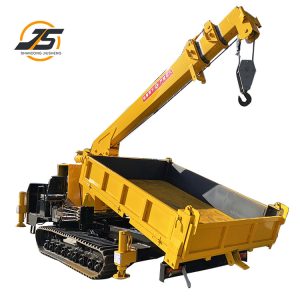
Crawler crane is different from car crane, driving speed is slow and can not run on the road. Transportation crawler crane is very test equipment personnel technology, the whole equipment needs to be disassembled, then loaded and transported, after arriving at the construction site to reassemble. Every step needs to be careful, just the crawler crane main engine on board has happened many
View details